IMPORTANT: If your network has both QuickTime and Real RTSP traffic, you must use this option for any transparent streaming services you create.
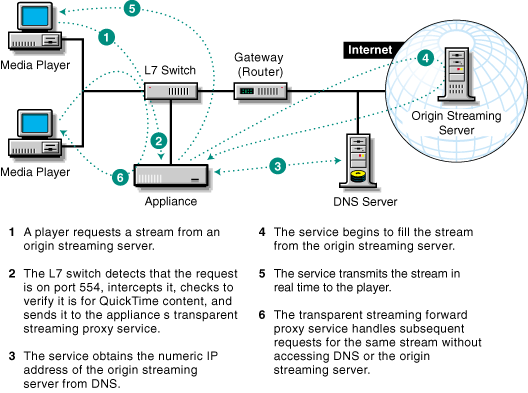
An L7 switch on the same network as the client workstation intercepts media player requests from the client, identifies which requests are for QuickTime content, and sends only those requests to the appliance. (Other streaming media requests are sent to the target origin streaming server.) The transparent streaming proxy service processes the QuickTime requests for the players.
Figure 32
Assuming the default streaming transport settings (UDP, RTSP) have not been changed, transparent streaming proxy doesn't require player configuration.
After the switch and the appliance have been configured, proxy services are transparent to the player.
Figure 33 provides a visual map for the information in this section.
NOTE: The letters in Figure 33 are referenced in the table that follows. The addresses shown are for illustration purposes only. You will need to substitute actual addresses for your network.
Figure 33 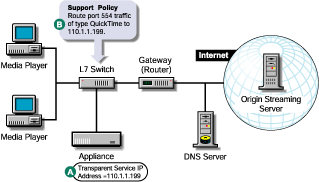
| To | Do This | Notes |
|---|---|---|
Ensure your basic network configuration is complete |
|
|
Set up the appliance to work around firewall limitations |
For guidelines and more information, see Getting QuickTime Streaming Content Through Firewalls. |
|
Set up transparent streaming proxy services on the appliance |
|
See A in Figure 33. If you enable logging, log files for the transparent streaming service will have the same name as the streaming service. For more information, see Client Accelerator Tab and Transparent Streaming Service Dialog Box (MMS). |
Set up your L7 switch to route QuickTime player requests (port 554 traffic) to the appliance |
|
See B in Figure 33. |
Set up players |
Assuming the default player configuration settings have not been changed, transparent L7 streaming proxy doesn't require player configuration. |
Streaming transport settings should be UDP, RTSP. Streaming proxy settings should not be enabled for an RTSP proxy server. |