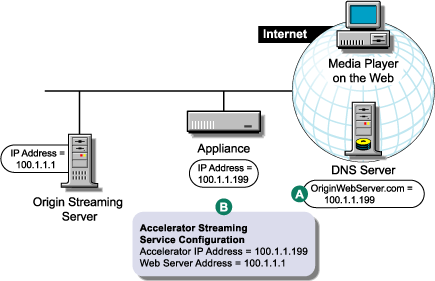


Figure 9 provides a visual map for the information in this section.
NOTE: The letters in Figure 9 are referenced in the table that follows. The addresses shown are for illustration purposes only. You will need to substitute actual addresses for your network.
Figure 9
| To | Do This | Notes |
|---|---|---|
Understand Media Excelerator's features. |
|
|
Ensure your basic network configuration is complete. |
|
|
Ensure that DNS resolves browser requests to the appliance IP addresses configured for the streaming server accelerator services. |
See A in Figure 9. |
|
Increase the number of concurrent connections that can be serviced by the Windows Media server. |
|
If you know that users will never connect via HTTP, then it is not necessary to enable HTTP support on your Windows Media Server. You will not need to set up an HTTP accelerator service, as mentioned on the following page. This would be a rare circumstance. If the server is running both IIS and MMS, you will need to create two Web accelerators on the appliance---one to accelerate the server IP address handling IIS traffic and another to accelerate the server IP address handling MMS traffic. |
Set up an HTTP accelerator service |
|
See B in Figure 9. If logging is enabled, accelerator log files for the Web server accelerator will have the same name as the Web server accelerator. IMPORTANT: If you are using the default HTTP port numbers, you can only configure one HTTP service per IP address. If you enter DNS names in the Web Server Addresses list, make sure they are not the names that now resolve to the appliance's numeric IP addresses. That would create an endless loop. |
Set up an MMS accelerator service. |
For more information, see Streaming Tab in the Volera Excelerator 2.3 Administration Guide. |
See B in Figure 9. If logging is enabled, MMS log files for the MMS accelerator server will have the same name as the MMS accelerator service. Both native MMS and HTTP-MMS requests will be logged in this log file. IMPORTANT: If you are using the default MMS port numbers, you can only configure one MMS service per IP address. If you enter DNS names in the Web Server Addresses list, make sure they are not the names that now resolve to the appliance's numeric IP addresses. That would create an endless loop. NOTE: UDP requests are filled using TCP unless the Allow UDP for Filling option is checked when a Streaming service is created. |